

A museum founded by the Simon Wiesenthal Center
Children of the Holocaust: Their Lives and Stories
As many as 1.5 million Jewish children were murdered in the Holocaust. At the Museum of Tolerance, every visitor to the Holocaust Exhibit meets one of them through a photo card that tells one child's story. Learn what happened to children, how some survived, and whose lives we remember.
Museum of Tolerance email updates, including Holocaust education programs, survivor talks and new exhibits.
You are subscribed. Thank you.
- Founded in 1977
- Global advocacy, education, and research
- Teaching the lessons of the Holocaust
What happened to children in the Holocaust?
Nazi Germany and its allies and collaborators murdered as many as 1.5 million Jewish children, along with tens of thousands of Romani children and about 10,000 children with disabilities in Germany. Jewish children were starved in ghettos, shot beside their parents, and sent to the gas chambers on arrival at killing centers.
Some Jewish children survived: in hiding, under false identities, through rescue efforts such as the Kindertransport, with partisans in the forests, or by enduring the camps. Most child survivors lost parents and much of their family, and many rebuilt their lives in new countries after the war.
Why children were targeted
Nazi racial ideology targeted Jewish children because they were Jewish. In the plan to murder the Jews of Europe, children represented the Jewish future that the perpetrators set out to destroy, and age offered no protection.
In the ghettos, children died of hunger, disease and cold. Because they could not do heavy labor, younger children were often among the first chosen for deportation.
Deportation and the killing centers
At Auschwitz-Birkenau and other killing centers, most young children were sent straight to the gas chambers on arrival, often together with their mothers or grandparents. Teenagers who looked old enough to work sometimes passed the first selection, only to face starvation, forced labor and disease.
In occupied Poland and the Soviet Union, German killing squads shot children together with their parents at the edges of mass graves. SS doctors also used children, including twins, in medical experiments that often ended in their deaths.
How some children survived
Survival depended on courage, the help of others and chance. Some children were hidden by non-Jewish families, in convents, or by whole communities such as the village of Le Chambon-sur-Lignon in France. Others lived under false identities, escaped across borders, or found shelter with Jewish partisans in the forests.
The Kindertransport brought between 9,000 and 10,000 children, most of them Jewish, from Nazi Germany and the territories it controlled to Great Britain. The first transport arrived in December 1938. The main program ended when war broke out in September 1939, and one last transport left the Netherlands in May 1940. Their parents could not come with them, and many of the children never saw their parents again.
Remember Their Stories With Us
Get Museum email updates, including survivor talks, Holocaust education programs and commemorations.
You are subscribed. Thank you.
The children in these stories
Each of these children has a photo card in our Children of the Holocaust collection.
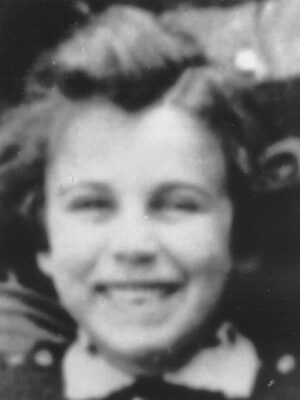
Lore Baer
Amsterdam, born 1938. Survived in hiding.
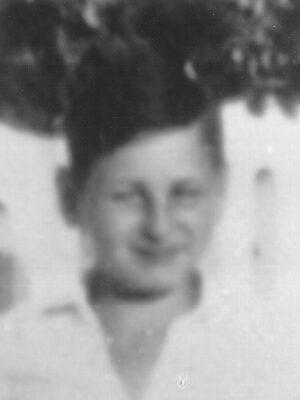
Alfred Ament
Vienna, born 1927. Escaped to Switzerland.
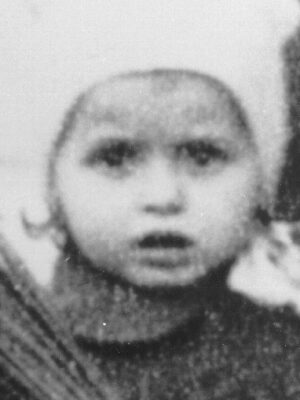
Mary Steinhauser
Vienna, born 1938. Survived in Shanghai.
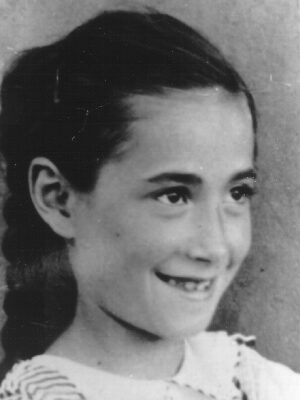
Tsila Marcus
Survived with the partisans.
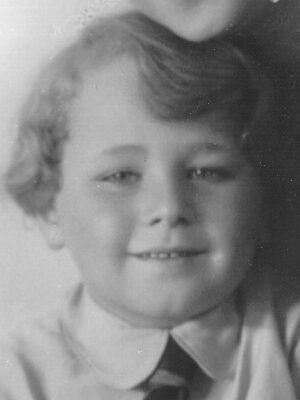
Simcha Frumkin
Liberated at 14.
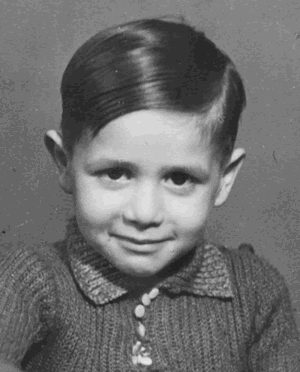
Peter Berlowitz
Survived. Later a Museum Guide.
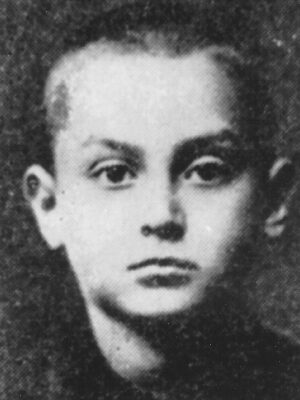
Yitskhok Rudashevski
Vilna, born 1927. Murdered at 16.
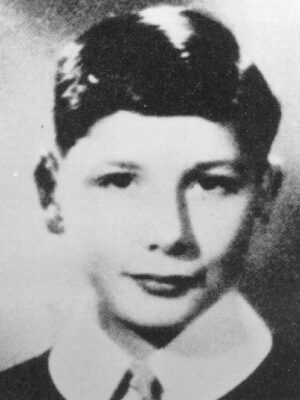
Georges Andre Kohn
Paris, born 1932. Murdered at 12.
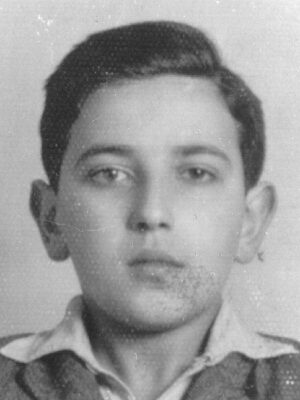
Natan Abbe
Lodz, born 1924. Shot at the ghetto gate.
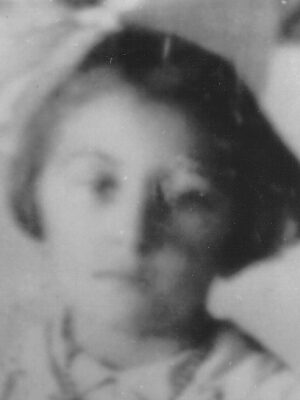
Rashka Schwimmer
Kirajhaza, born 1929. Murdered at Auschwitz.
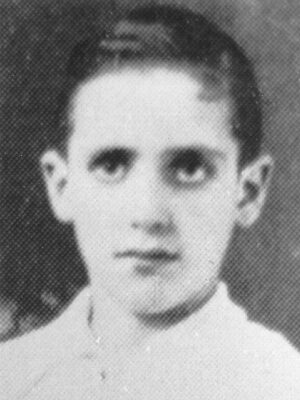
Jacques Benguigui
Oran, born 1931. Murdered at Auschwitz.
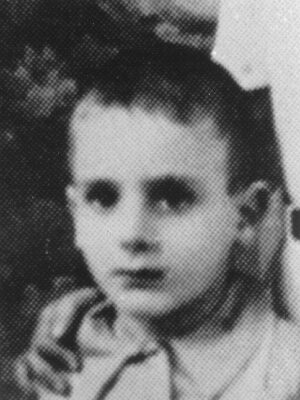
Richard Benguigui
Oran, born 1937. Murdered at Auschwitz.
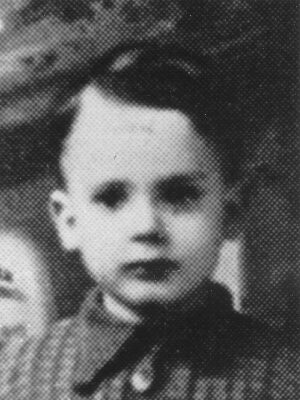
Jean-Claude Benguigui
Oran, born 1938. Murdered at Auschwitz, age 5.
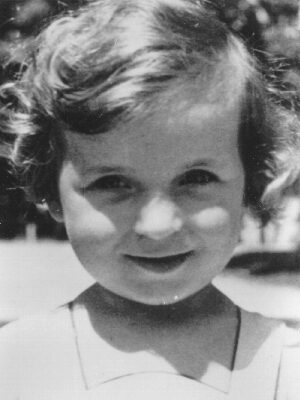
Cary Krell
Vienna, born 1936. Died of typhus at 8.
Children who survived
Lore Baer, born in Amsterdam in 1938. When the deportations from the Netherlands began, her parents found a family in a small town willing to risk death to hide her. After the war they were reunited, when Lore was 7 years old.
Alfred Ament, born in Vienna in 1927. In March 1944 he and 30 other children escaped to Switzerland with false identity cards. After the war he learned that his father had been killed in a concentration camp. He later immigrated to the United States.
Mary Steinhauser, born in Vienna in 1938. She and her parents lived in the Shanghai Ghetto, where thousands of Jewish refugees from Europe had found shelter. All of its residents were liberated, Mary among them, at 7 years old.
Tsila Marcus hid in the forest, living on flowers and grasses and hiding at every noise. Partisans found her and reunited her with her mother. Only 5 years old, she helped them find food until liberation.
Simcha Frumkin was forced into slave labor with his father and moved from camp to camp ahead of the Allied advance. His father died in a camp barracks. Two weeks later American troops liberated the camp, and Simcha, 14 years old, was free.
Peter Berlowitz survived the Holocaust, and so did his mother. He later became known as Peter Daniels, settled in Los Angeles and served as a Museum Guide here at the Museum of Tolerance.
Children who were murdered
Yitskhok Rudashevski, born in Vilna in 1927. At 16 he was taken to the forest outside the city with others and murdered. A cousin who escaped the massacre and joined the partisans returned to Vilna after the war and found Yitskhok's 204-page diary.
Georges Andre Kohn, born in Paris in 1932, was sent to Auschwitz with his grandmother. He was one of a group of children who were injected with morphine and murdered. Georges died three days before his 13th birthday.
Natan Abbe, born in Lodz, Poland, in 1924, lived in the Lodz ghetto. In late 1940 a German soldier shot him to death at the ghetto gate.
Rashka Schwimmer, born in 1929 in Kirajhaza, Czechoslovakia, was forced into a ghetto with her family. The Jews of the ghetto were later packed into locked cattle cars and sent to Auschwitz, where Rashka and her family were murdered in the gas chambers.
Jacques, Richard and Jean-Claude Benguigui were brothers from Oran, Algeria, living at a children's home in France. Their mother was arrested and deported in July 1943. The three brothers were later deported to Auschwitz and murdered in the gas chambers in May 1944. Jean-Claude was 5 years old.
Cary Krell, born in Vienna in 1936, was separated from her mother, who was sent to Auschwitz and murdered. Weakened by hunger in the winter cold, Cary died of typhus on January 6, 1945, a few weeks before her 9th birthday and before liberation came.
What can a child's diary tell us?
Yitskhok Rudashevski kept a diary in the Vilna ghetto as a teenager. He wrote about school, a youth club, the books he was reading and the fear that followed each roundup. The diary ends in April 1943, months before the ghetto was destroyed.
A diary like this is a record made at the time by someone who did not know how events would end. It shows what one child noticed and cared about, which official documents rarely capture. It is also one voice. Historians read it alongside other sources to understand the place and the period.
After the war
Many child survivors emerged into a world without their families, and some were reunited with a parent or other relatives. Thousands of orphaned children lived in displaced persons camps, and many later built new lives in Israel, the United States and other countries. Tracing services worked for years to reunite families, and many children waited months or years to learn what had happened to their parents.
Many child survivors later spoke to students and visitors about what they lived through. Their testimony, and the remembered lives of the children who did not survive, remain among the most direct ways to understand the Holocaust. For the wider chronology, see the Holocaust timeline from 1933 to 1945.
How the Museum remembers them
Every visitor to the Holocaust Exhibit at the Museum of Tolerance receives a photo card with the story of one child. The child's fate is revealed at the end of the exhibit, so the history is followed through a single life.
Our Children of the Holocaust collection holds the biographies of these children, from Amsterdam and Vienna to Vilna, Prague and Oran. Their stories are shared with teachers and students through the Museum's education programs.
Common Questions
- How many children died in the Holocaust?
- As many as 1.5 million Jewish children were murdered or died in the Holocaust. Tens of thousands of Romani children and about 10,000 children with disabilities in Germany were also killed.
- How did children survive the Holocaust?
- Most child survivors lived through the war in hiding, under false identities, through rescue efforts such as the Kindertransport, with partisans, or by enduring the camps as teenagers who could be forced to work.
- What was the Kindertransport?
- A rescue effort that brought between 9,000 and 10,000 children, most of them Jewish, from Nazi Germany and the territories it controlled to Great Britain. Most transports ran from December 1938 until war began in September 1939, and a final one left the Netherlands in May 1940.
- What is a child survivor of the Holocaust?
- A child survivor is someone who lived through the Holocaust as a child. Children of survivors, often called the second generation, are the sons and daughters born to survivors after the war.
- What is the photo card at the Museum of Tolerance?
- Each visitor to the Holocaust Exhibit receives a card with the story of one child and learns that child's fate at the end of the exhibit.
Continue Learning With the Museum
Stay connected with Museum email updates, including survivor talks, exhibits and education programs.
You are subscribed. Thank you.